• wusheng888@126.com
  • Monday-Friday:09:30 pm-05:00pm
  • Address: Unit 1111, 11/F, Hollywood Plaza, 610 Nathan Road, Mongkok, Kowloon, HongKong.

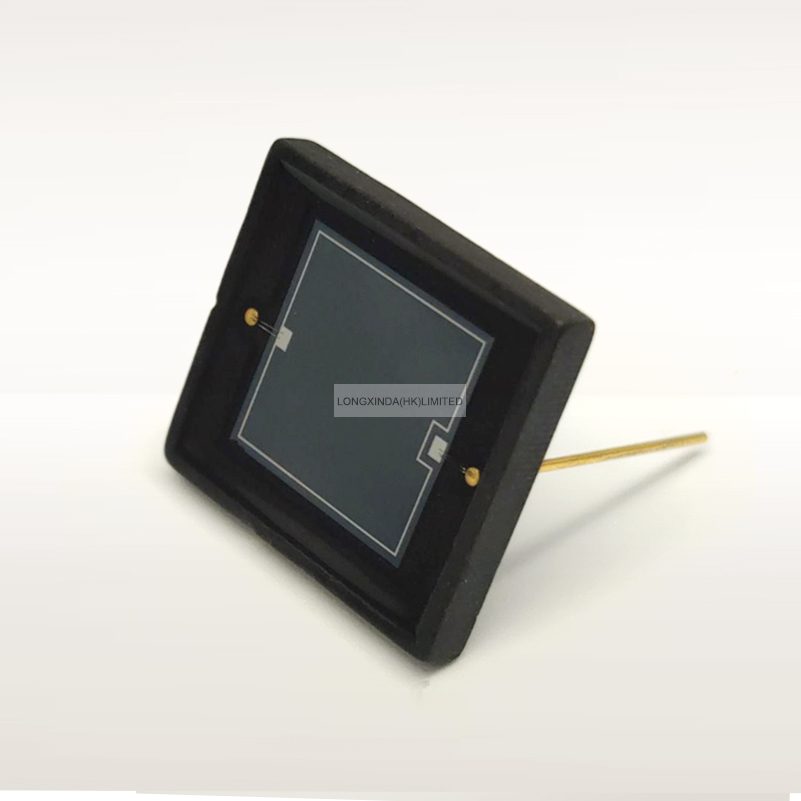
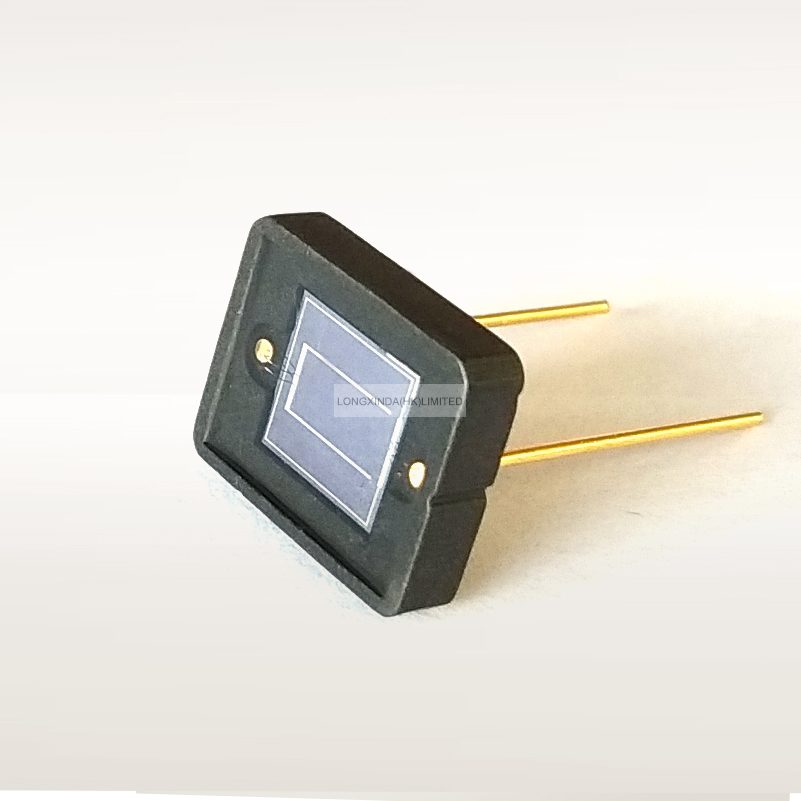
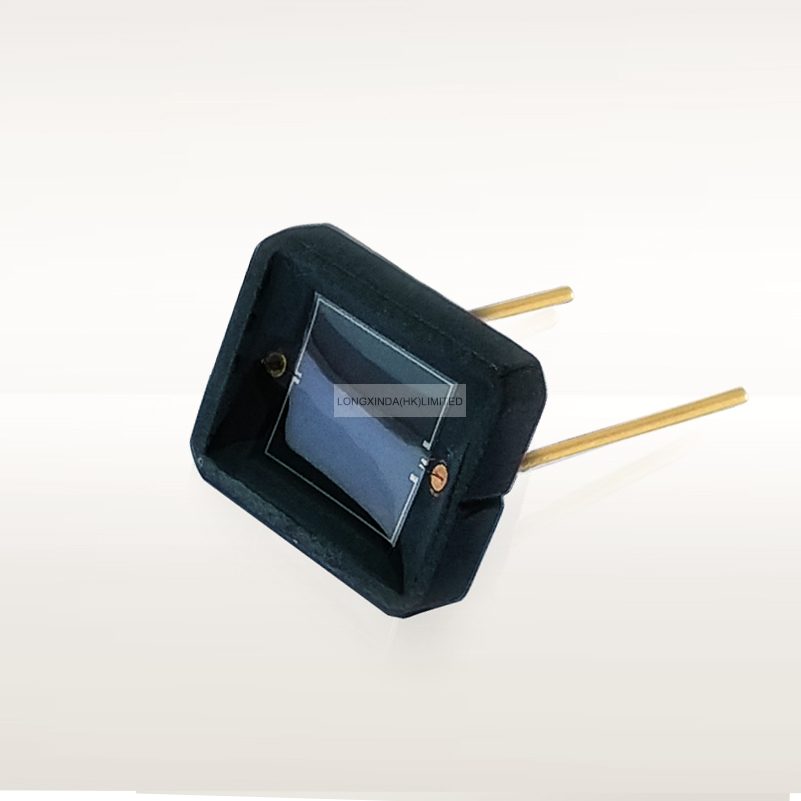
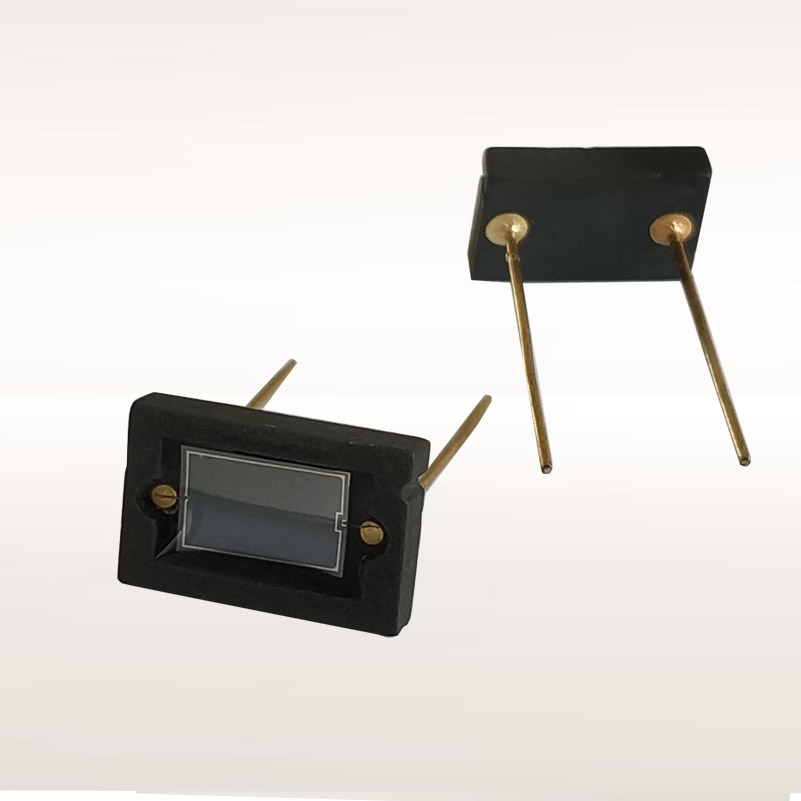
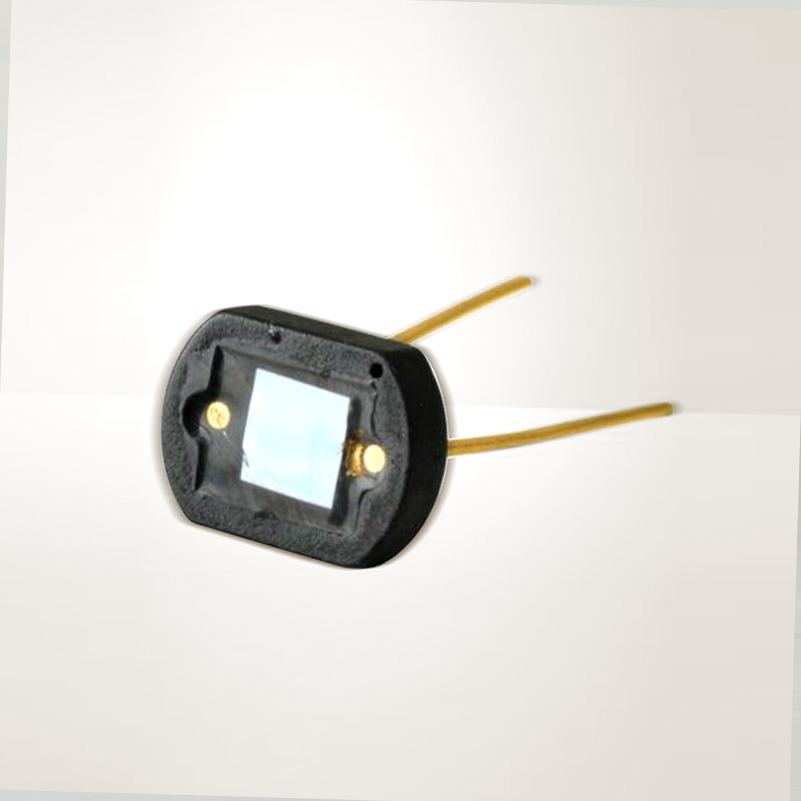
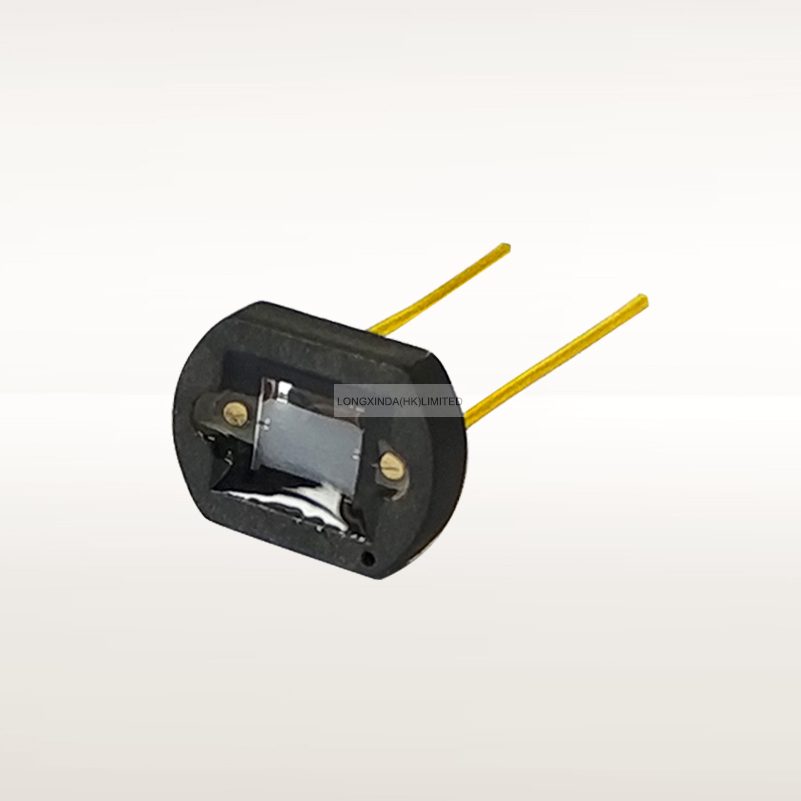
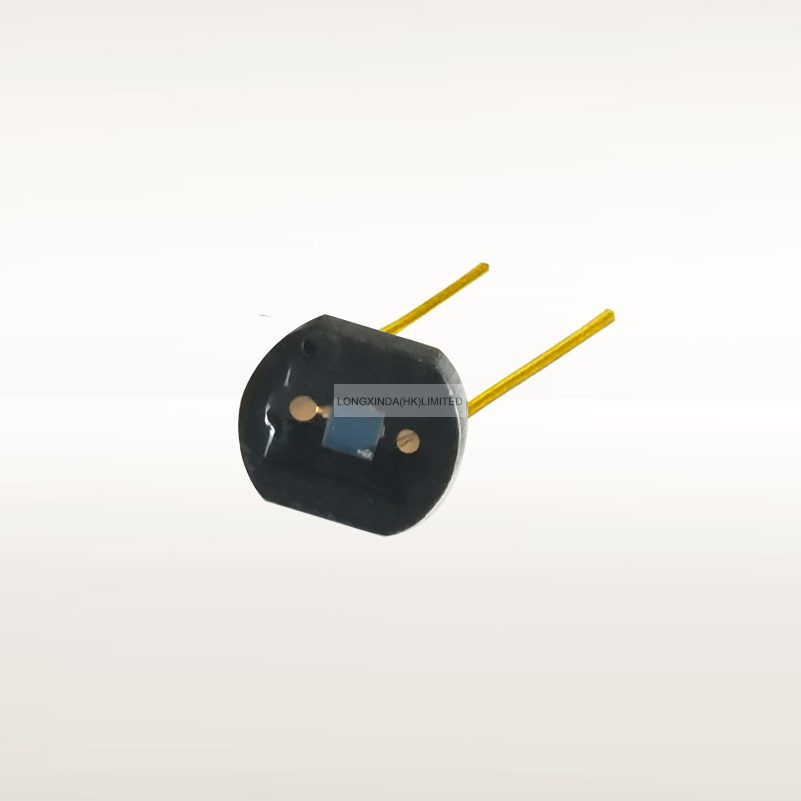
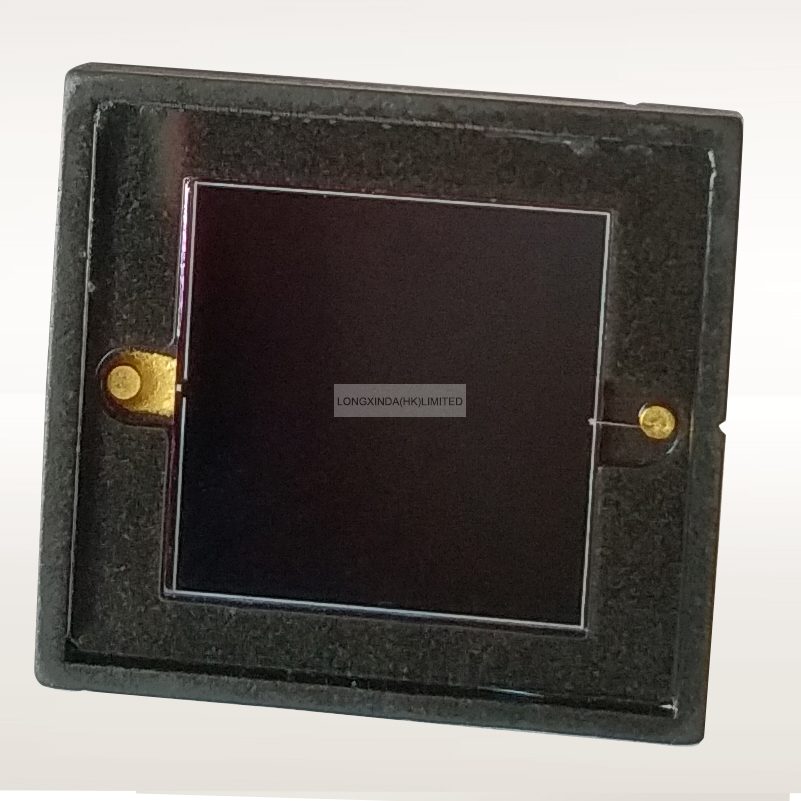
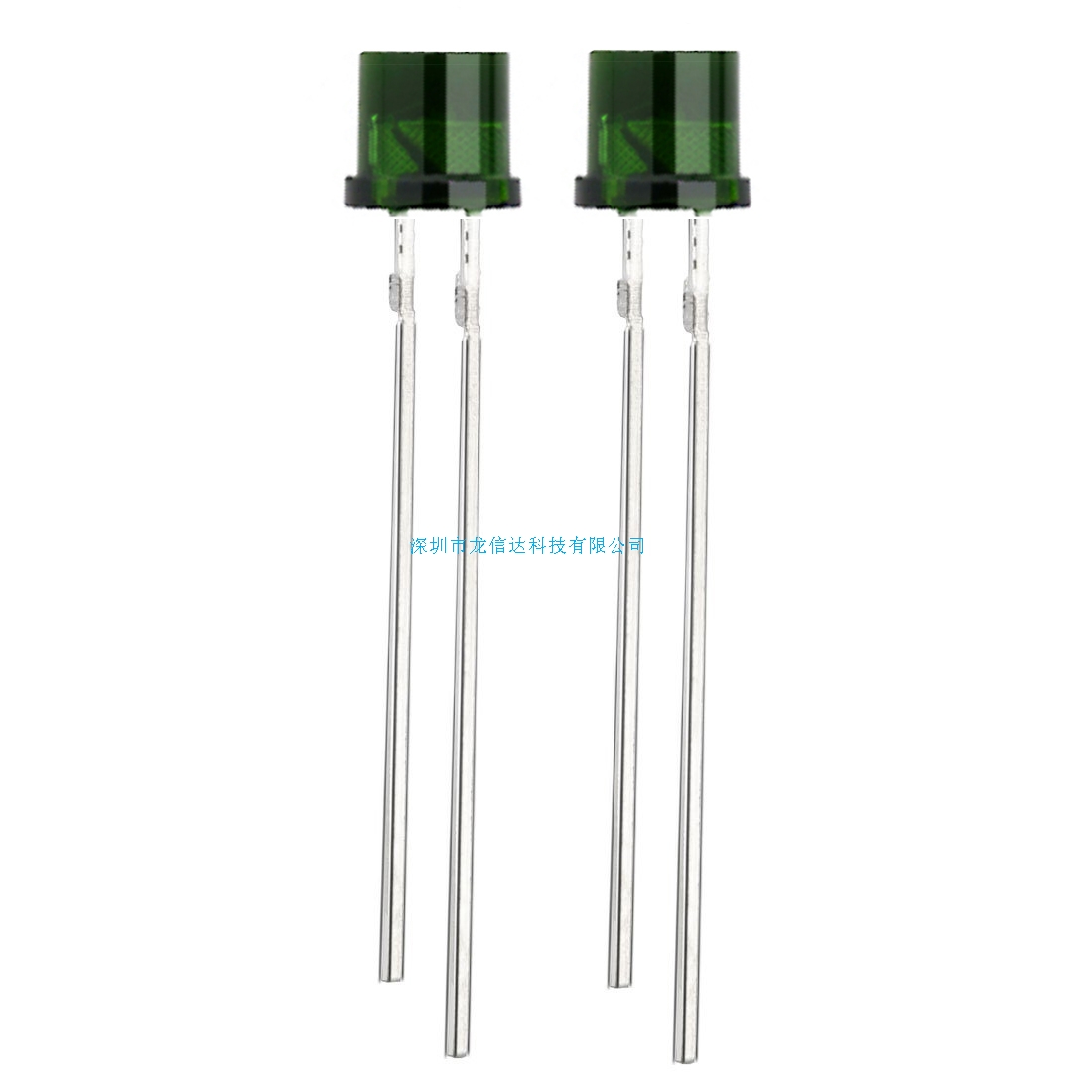
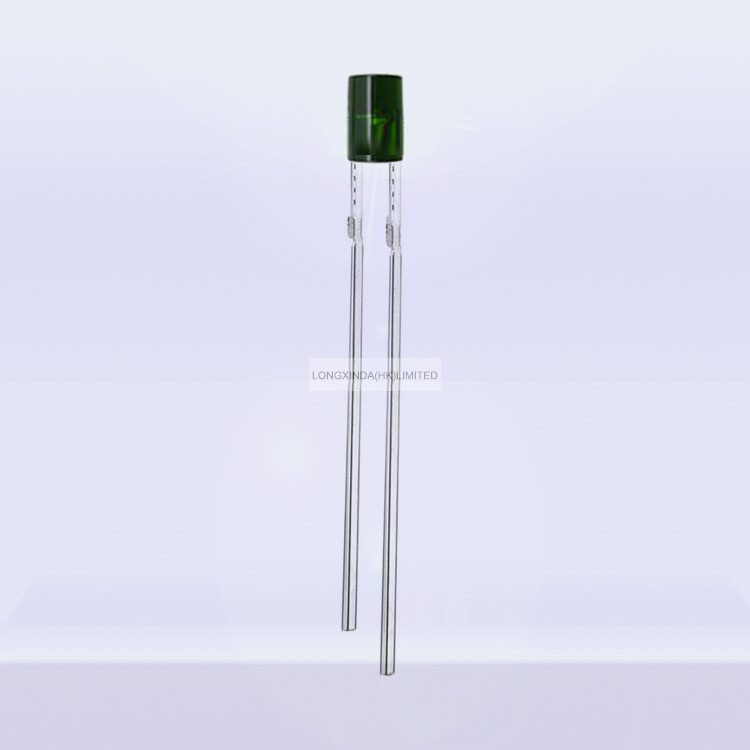
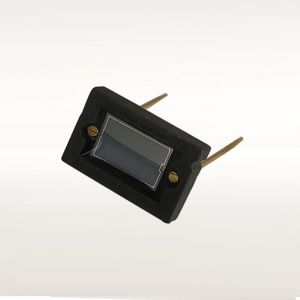
Photoresistor 8-20kohm @10lux LXD14528 Light Dependent Resistor (LDR) Ø14mm CdS Photocell Serie

Photoresistor 8-20kohm @10lux LXD14528 Light Dependent Resistor (LDR) Ø14mm CdS Photocell Serie

Detail Contact Us
Photoresistor 8-20kohm @10lux LXD14528 Light Dependent Resistor (LDR) Ø14mm CdS Photocell Serie

Product Description

CdS photoconductive cell utilize photoconductive effects in semiconductors that decrease their resistance when illuminated by light. These sensors are non-polar resistive elements with spectral response characteristics close to the human eye(luminous efficiency),thus making their operating circuits simple and small.

■ Features

·Epoxy encapsulated

·Quick Response

·Small Size

·High Sensitivity

·Reliable Performance

·Good Characteristic of Spectrum

■Analog Applications:
● Camera Exposure Control
● Auto Slide Focus - dual cell
● Photocopy Machines - density of toner
● Colorimetric Test Equipment
● Densitometer
● Electronic Scales - dual cell
● Automatic Gain Control - modulated light source
● Automated Rear View Mirro

■Digital Applications:
● Automatic Headlight Dimmer
● Night Light Control
● Oil Burner Flame Out
● Street Light Control
● Absence / Presence (beam breaker)
● Position Sensor

■Absolute Maximum Rating:

Symbol Parameter Min Max Unit
Vpk DC Voltage Applied / 250 V
Pd Power Dissipation at 25℃ / 200 mW
To Operating and storage temperature -30 +70
Ts Soldering Temperature* / 260

*0.118 inch from base for 3seconds with heat sink

■Electro-optical characteristics rating (Ta=25 ℃ unless otherwise noted)

Symbol Characteristics Text Conditions Min Typ Max Units
RD Dark Resistance After 10 sec.Ev=0Lux @2856°K 1 / /
RL Light Resistance Ev=10Lux @2856°K 8 / 20
S Sensitivity / 0.6 / Ω/LUX
入 Range Spectral Application Range Flooded 400 / 700 nm
入 Peak Spectral Application Range Flooded / 560 / nm
Tr Rise Time Ev=10Lux @2856°K / 30 / mS
Tf Fall Time After 10Lux @2856°K / 30 / mS

** R100 , R10: photocell resistances at 100Lux and 10Lux at 2856°k respectively.

** E100 , E10: Iuminances at 100Lux and 10Lux at 2856°k respectively.

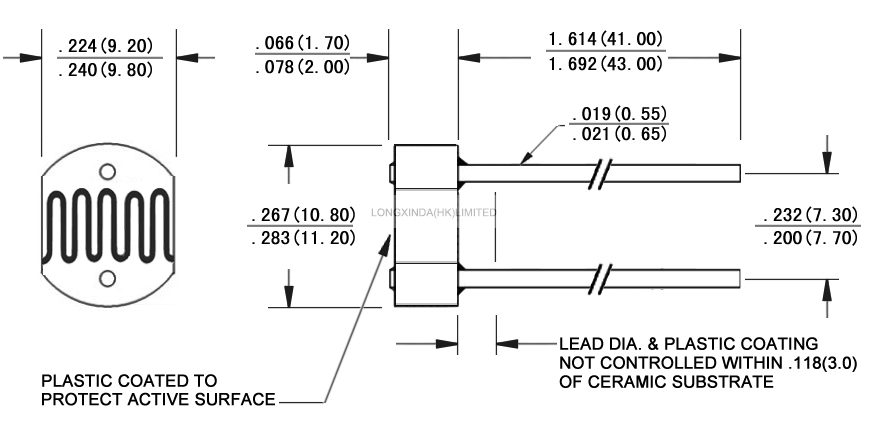
Package Dimensions inch [mm]

Precaution for use

  1. Usage precautions
    ●Even within the absolute maximum ratings, try to stay in the low region for power dissipation,applied voltage,and ambient temperature.(Since this allowable power dissipation applies to total illumination of the photosens-tive surface, when only part of the photosensitive surface is used , the allowable power consumption shouldbe reduced in proportion to the surface that is being used.)
    ●Use at high temperature and high humidity shortens the cell life ,and should be avoided.
    ●Avoid usage that exposes the CdS photoconductive cell to strong ultraviolet light.
    ●For low-light detection (1lux or less for general CdS photoconductive cells),Characteristics are less stable.
    ●If the CdS photoconductive cell is subject to strong vibration or shock , reinforce the cell itself and its leads.
  2. Handling precautions
    ●Since the window is made of glass and plastic coating , avoid touching it , pressing it , and causing friction with it with hard objects and hot objects. In particular,this can cause deterioration of the optical and ele-trical characteristics of plastic-coated CdS photoconductive cells. However , there is no problem with normal handling by hand.
    ●Since extreme bending or twisting of the lead at the root places stress on the lead root , avoid this . When forming the lead near the root , provide support for the lead root before bending the lead.
    ● Do not solder the leads with stress applied, do not pull,twist,or compress the leads right after they have been soldered.Allow them to cool befor changing the position or direction of the leads.
    ● When soldering , be careful about the soldering temperature and duration. In general,CdS photoconductive cells should be soldered at least 5mm down the lead from the cell package itself,with a solder iron no hotter than 260for no longer than 5 seconds.(Check the temperature of the tip of the soldering iron and use a soldering iron temperature controller if necessary.)If these conditions cannot be observed, prevent the temperature rise form reaching the CdS photoconductive cell (by using heatsink) or increase the distance of the soldering from the CdS photoconductive cell itself.
    ● Avoid any chemicals that can corrode metal or cause deterioration of plastic. If there is a possibility of metal corrosion or deterioration of plastic, experiment only after confirming that it will not harm the CdS photoconductive cell.
    ● When washing or cleaning with solvents,use an alcohol solvent(isopropyl alcohol,ethyl alcohol,or a similar agent).Ultrasound wave cleaning with these solvents depends greatly on the usage conditions, but the cleaning time should be no longer than 30 minutes. Avoid chloro-hydrocarbon and ketone solvents. They can cloud and dissolve the plastic parts of the cds photoconductive cell.

NOTICE:

This PDF catalog is downloaded from the website of Shen Zhen Long Xin Da Technology Co., Ltd. Therefore, it’s specifications are subject to change or our products in it may be discontinued without advance notice. Please check with our sales representatives or product engineers before ordering.

• This PDF catalog has only typical specifications because there is no space for detailed specifications. Therefore, please approve our product specifications or transact the approval sheet for product specifications before ordering.

•This product is non-environmentally friendly products do not meet the EU RoHS directive..

• EU RoHS is "the European Directive 2002/95/EC on the Restriction of the Use of Certain Hazardous Substances in Electrical and Electronic Equipment".

• For more details, please refer to our website for EU RoHS'

* Your Name (Your Name [it] )

Plsease input value
Company name (Company name [it] )
Telephone number (Telephone number [it] )
* E-mail (E-mail [it] )

Error E-mail format

Address (Address [it] )
* In order to give you a better quotation, please describe the specific content of the project in deta (In order to give you a better quotation, please describe the specific content of the project in deta [it] )

Plsease input value
  • English
  • 中文
  • Spain
  • pt
  • French
  • ru
  • jp
  • de
  • tr
  • india
  • kr
  • it
  • arabic
  • vi
  • th
  • id